
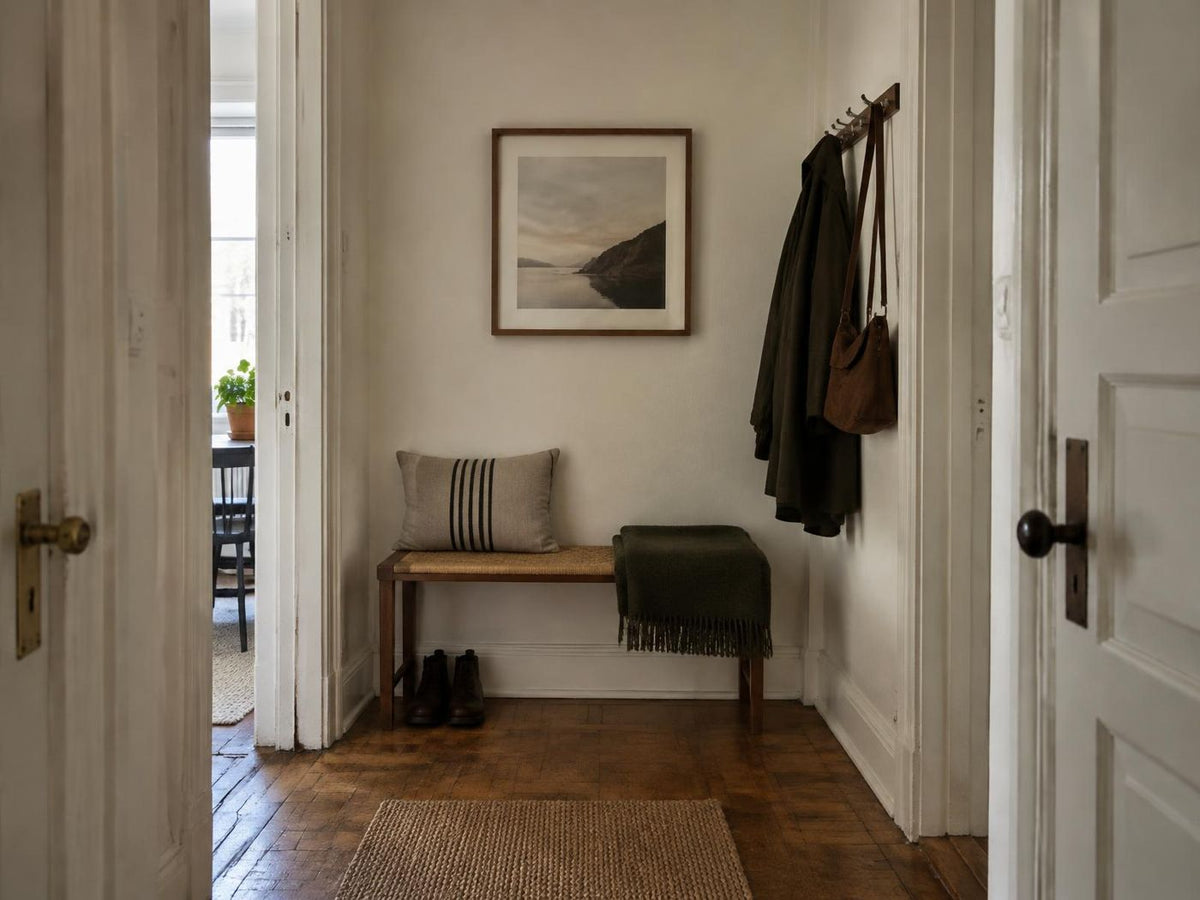
A small room does not automatically need small art. Several tiny pictures can make a wall feel busier than one well-chosen print. Start by deciding where you want the eye to land, then choose a format that fits that role.
Choose a focal wall
The area above a bed, desk or compact sofa is often a useful starting point. Avoid filling each available gap immediately. Leaving some walls quiet helps the art you choose feel more intentional.
Think about orientation
A portrait format can work in a narrow wall space; a landscape format can relate to a wider piece of furniture. Measure the actual area, including switches, shelves and door movement, before settling on a size.
Reduce visual competition
If the room already contains patterned textiles or open storage, a simpler image can create a calmer balance. If the furnishings are quiet, artwork can carry more colour and detail. There is no need to make everything neutral.
Test the frame as part of the picture
A dark outline is more visible than a pale one. That can be useful, but include it in your paper template when checking scale. The total outside dimensions matter, especially in a narrow space.
Compare options in our poster size guide. For a restful room, explore bedroom art; for a compact desk area, browse home office prints. Save a few alternatives and view them from the doorway before making a final choice.