
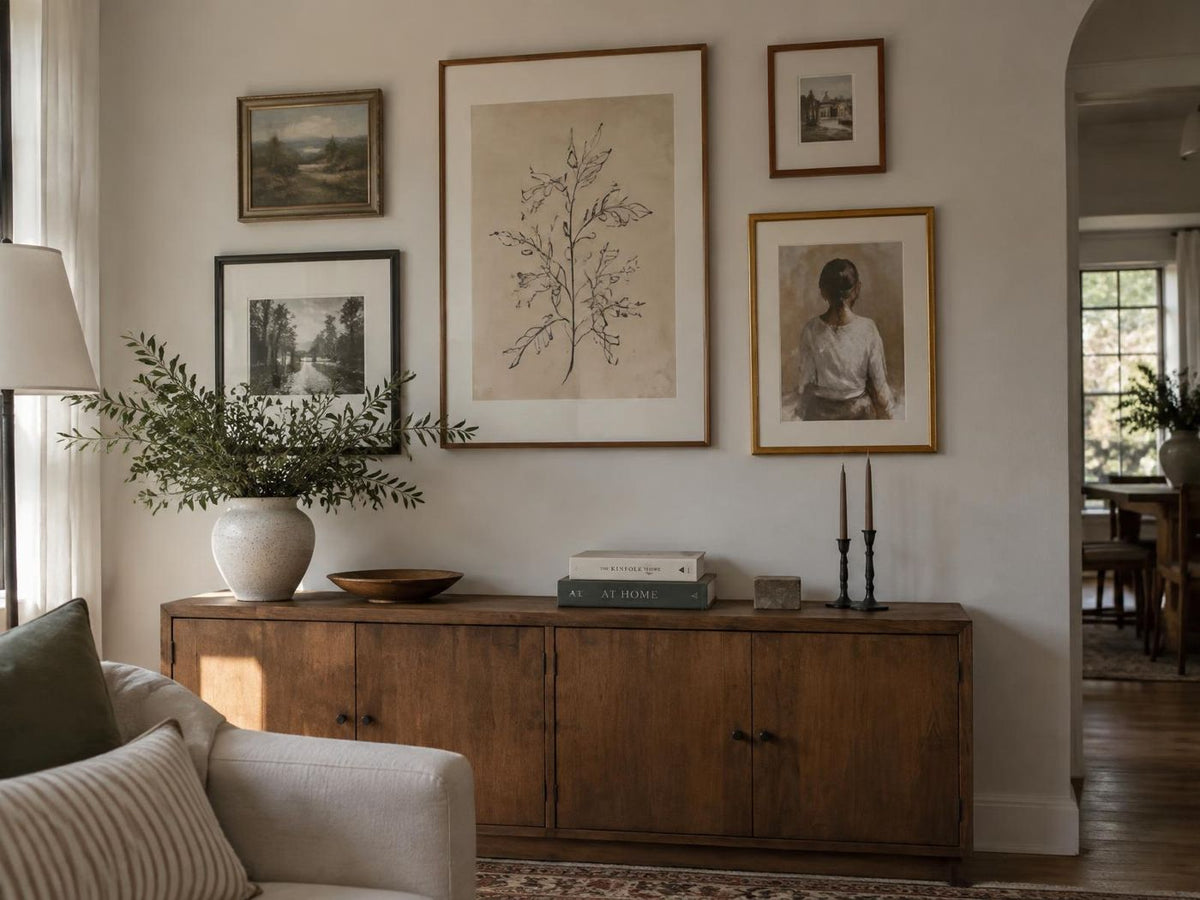
You do not need to choose between photography and illustration. A photograph brings texture and a sense of place, while a drawing can add rhythm or a simpler shape. The combination feels considered when the pictures share a visual connection.
Find one common element
Choose a shared colour, a repeated curve or a similar atmosphere. A photograph of warm stone might sit beside an earthy abstract shape. A leafy botanical drawing can echo the branches in a landscape. The connection can be subtle.
Give the eye somewhere to rest
Detailed photographs tend to contain many small changes in tone. Pairing one with a quieter illustration keeps the group from becoming visually crowded. Avoid choosing every picture because it is the most dramatic on its own.
Use framing to bring the group together
Repeating the same frame finish is an easy way to connect different media. Alternatively, use two finishes consistently across a larger wall. Compare the result against your furniture and wall colour with our frame guide.
Build around one anchor
Place the largest or strongest image first, then arrange smaller work around it. It does not have to sit in the middle. Keep the outside shape of the overall arrangement in mind, and test the layout with paper templates.
Browse photography and illustration together. Save a short list and compare it as a group before buying. Our gallery wall guide walks through the planning process.